Kathmandu Chitwan National Park and Nogarkot Tours-8 Days
Facts of the trip
| Trip Code: | KCNST03 |
| Trip Duration: | 8 days |
| Max. Altitude: | 2195m |
| Grade: | Easy |
| Program Type: | Sightseeing, safari and Hiking |
| Trek Start Point: | Kathmandu |
| Trek End Point: | Kathmandu |
| Accommodation: | Tea house |
| Meals: | Breakfast/Lunch and Dinner |
| Mode of Travel: | Tours |
| Transportation: | Air/Bus/Car |
| Minimum Pax: | 5 |
| Best season: | September/October and Marc/April |
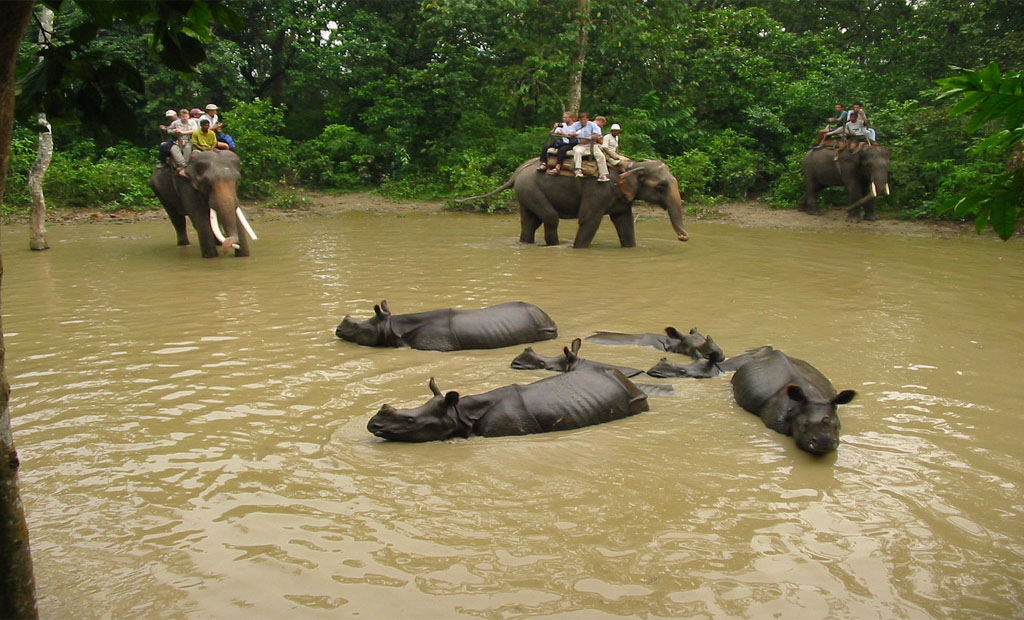
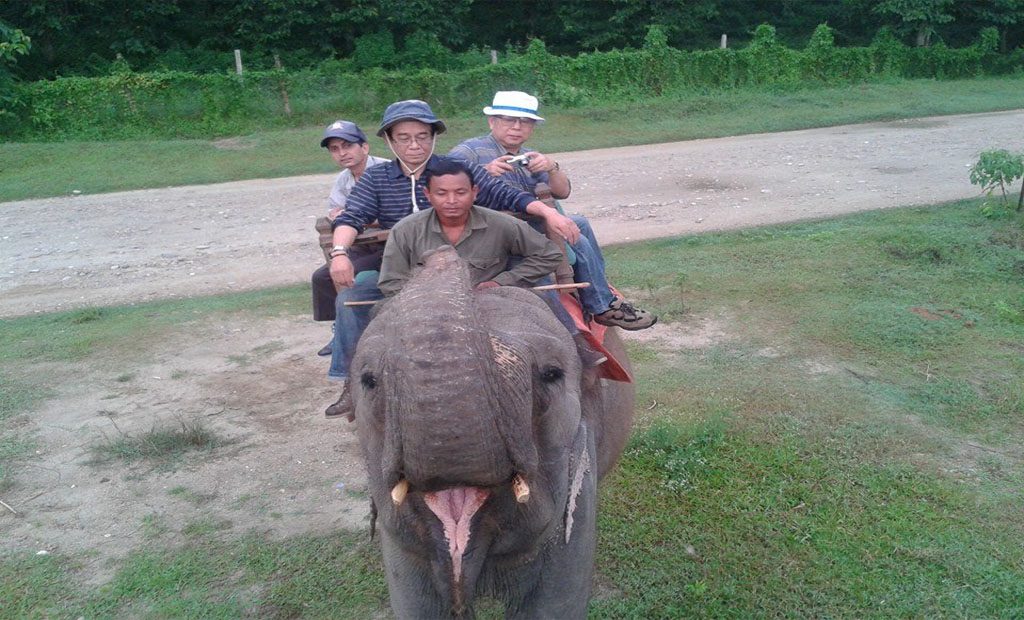
Chitwan Elephant tours.
Kathmandu Chitwan & Nagarkot Package Tours: Kathmandu city is stands at an elevation of 1350 meters (4,600 ft.) the Sea label and its central part of Nepal. why the Kathmandu is call valley because of its surrounded by four major mountains, namely: Shivapuri, Phulchowki, Nagarjun, and Chandragiri.
The Kathmandu valley is with major three districts. The density of the population is in Kathmandu is only 97 per square kilometers but the Kathmandu metropolitan city has a density of 13,225 per square kilometers but It is by far the largest urban agglomerate in Nepal, accounting for 20% of the urban population in an area of 5,067 hectares (12,520 acres) (50.67 square kilometers (19.56 sq. mi)).
Kathmandu city’s wealthy history is nearly 2000 years old, Its religious affiliation is dominantly Hindu followed by Buddhism. People of other religious beliefs also live in Kathmandu giving it a cosmopolitan.
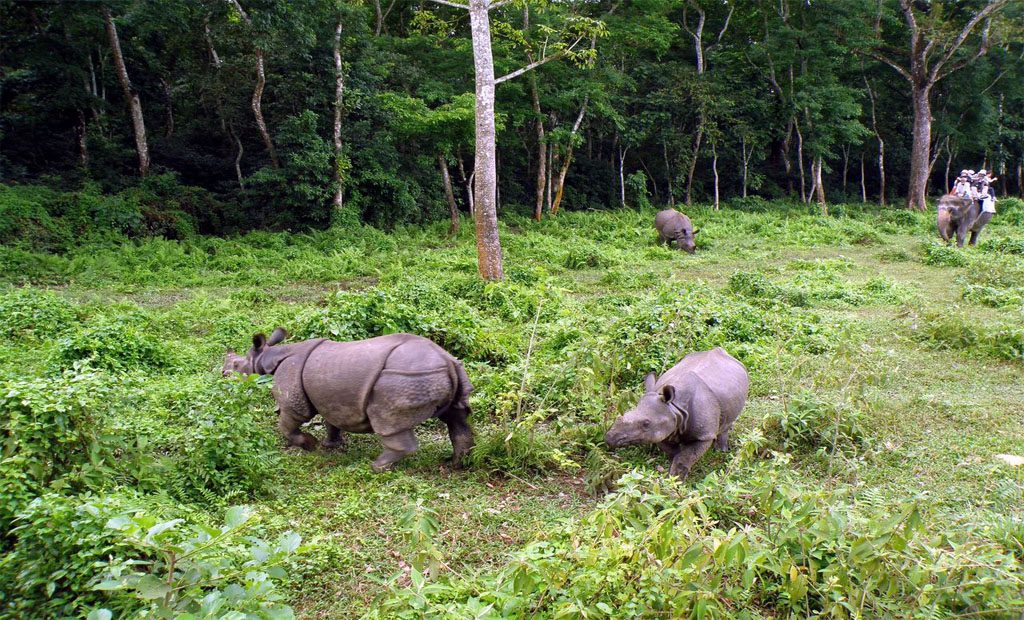
Chitwan National park covered 210 square miles. After an extension in 1980, it now covers 620 square miles, and another enlargement, now proposed and contains a wide variety of habitats, from the grassland and re-verie forests of the valleys side to the Sal forest on the hills side and the alpine forest.
Nagarkot, located 32 kilometers east from Kathmandu, it is one of the most scenic spots in Bhakapur district and is famous for its spectacular sunrise when the weather is clear. Visitors often travel to Nagarkot from Katmandu to spend the night and view the breathtaking sunrise. It also offers excellent views of the lndrawati river valley lying to the east.
Day 01:- Arrival in Kathmandu airport and transfer to the hotel.
Day 02:- Full day Kathmandu city sight seeing.
Day 03 :-After breakfast drive to Chitwan National park.
Day 04:- Full day Chitwan National park activities.
Day 05:-After breakfast drive to Kathmandu.
Day 06:-After lunch drive to Nagarkot.
Day 07:-Morning sunrise then drive back to Kathmandu.
Day 08:- Final departure from hotel to international airport.
 Day 01: Arrival in Kathmandu-Transfer to Hotel:-Welcome at the Tribhuvan International Airport and transfer to hotel in Kathmandu, rest at the hotel and briefing about the trip. Overnight accommodation is set with BB Plan.
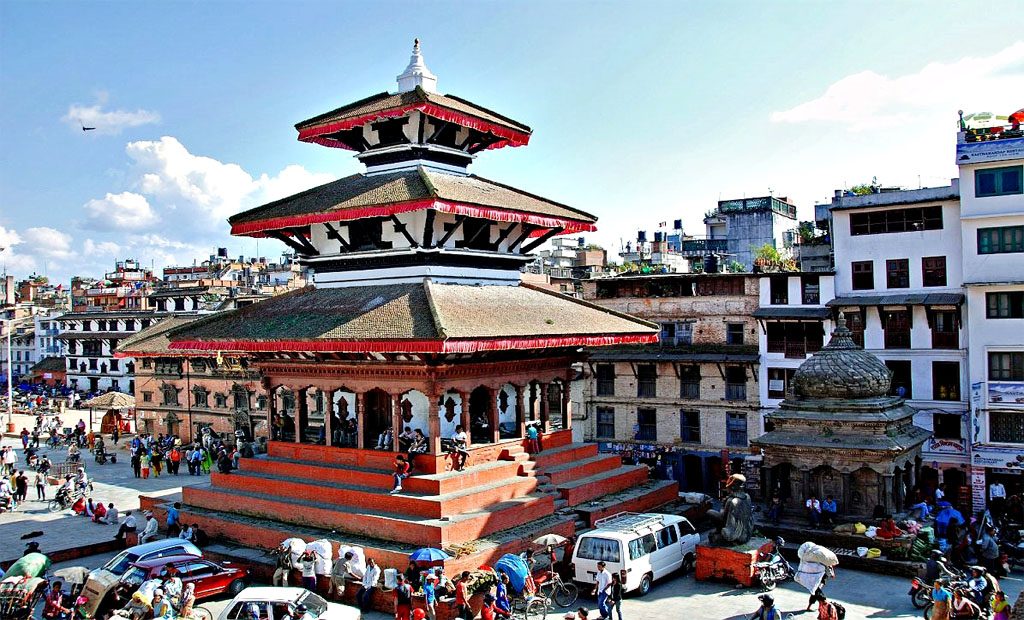
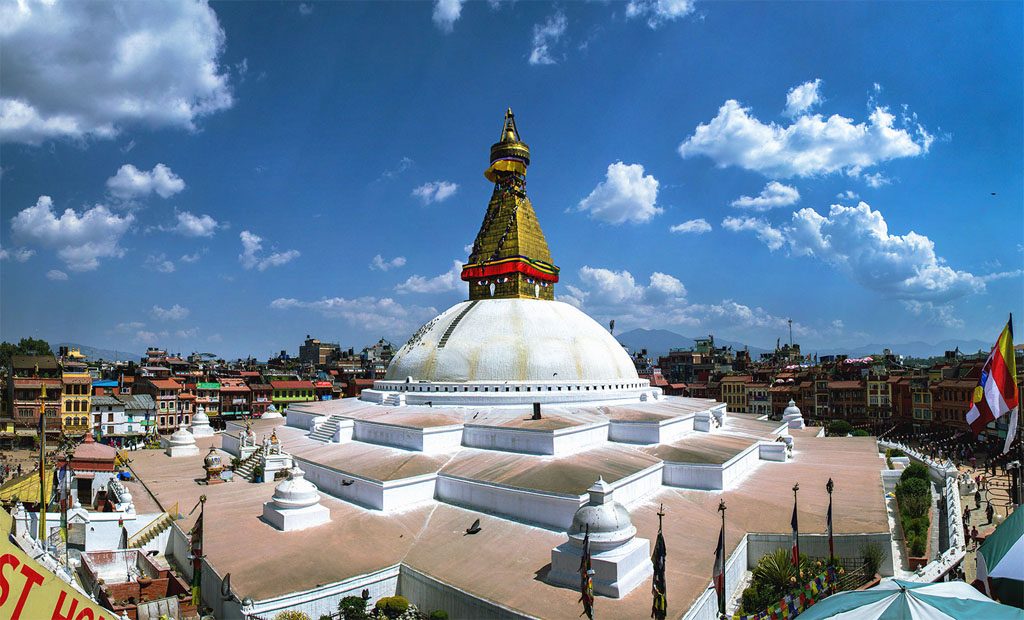
Day 02: Full day sightseeing in Kathmandu valley inclusive of Buddhanath Stupa (one of the biggest Buddhist stupa in Nepal, where also you will be able to see many monks and Tibetan, peoples), Pashupatinath (one of the most important Hindu Temple of God Shiva, where dead body also cremate), Bhaktapur City (Among three oldest cities is one of the interesting city, where visitor can see fifty-five wood carving windows palace, a lot of pottery clubs, many temples and a lot of wood carving place), Patan City (Also one of the city like Bhaktapur where you will be able to see a Hindus Temple call God Krishna Temple and many others as well as A Buddhist Temple call Golden Temple ) & Swyambhunath Stupa (One of oldest Buddhist Stupa situated at the highest place in Kathmandu Valley, from where you can see the scenery of Kathmandu Valley, as well as some mountain peaks also if the weather is nice) .
Day 03: After breakfast drives down to the Chitwan National Park overnight there.
Day 04: Full day activities at Chitwan National Park, Overnight at the same hotel.
Day 05: After breakfast by private vehicle drive back to Kathmandu and transfer to the hotel rest time is free and overnight at hotel.
Day 06: Morning free, Afternoon drives to Nagarkot (7,200ft.) for mountain views and sunset in the evening and sunrise in the morning overnight at hotel.
Day 07: After sunrise breakfast at 7:30 then drive back to Kathmandu afternoon is free.
Day 08: Departure transfer from the hotel to an international airport and proceed to check inside then finally fly to your own destination.
| Start Date | End Date | Price In US Dollar($) | AVAILABILITY | Booking |
|---|
AVAILABILITY OPTIONS
OPENED: This date is available and open for bookings.LIMITED: There are very limited number of available places on this departure. Immediate booking.
GUARANTEED: We have reached minimum numbers and this trip is guaranteed to depart.
CLOSED: This date is currently unavailable. Please contact us, if you are interested in travelling on this date.
Your Program Duration = 8 days Days
All the Prices are in GBP (£) Per Person.
Jungle Tours in Chitwan,
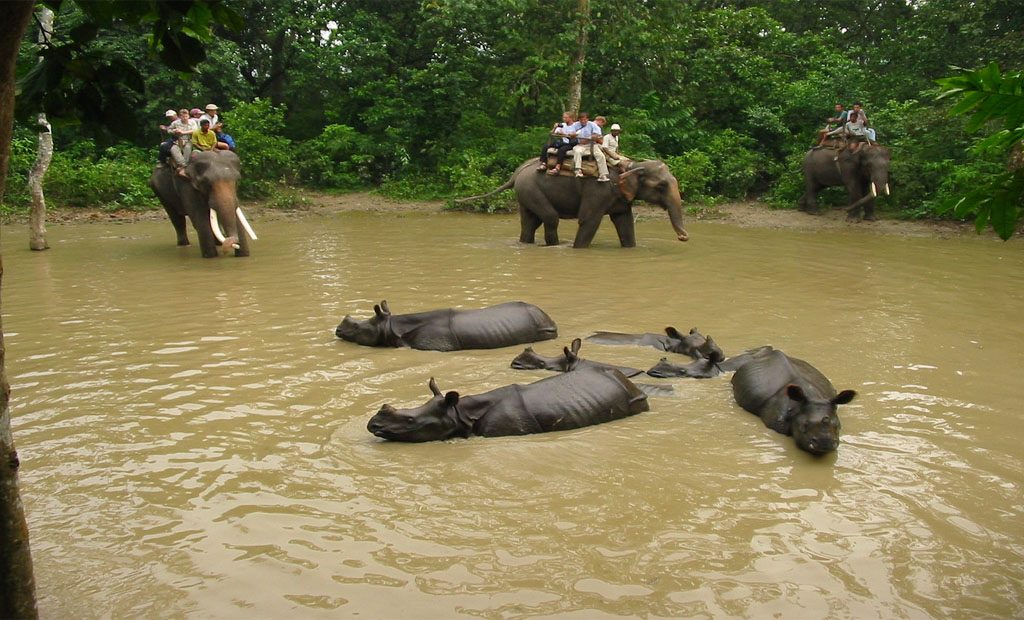
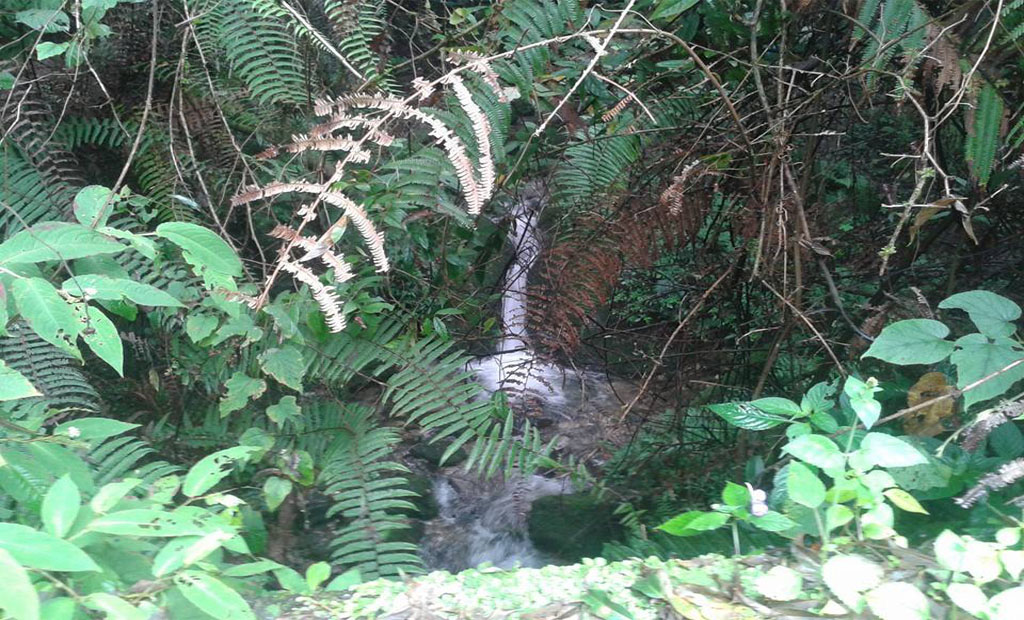
The Chitwan National park is one of the finest national parks in Asia; it lies in the lowlands of the south-central Nepal, covering an area of 932 squire .kilometers and is listed World Heritage site since 1984. It is renowned for its variety and amount of wildlife. It is home for some endangered species such as The Royal Bengal Tiger, One horned Rhinoceros, Leopard, Gaurs as well as Sloth Bear, Monkeys and Varieties of Deer, Crocodiles, and Butterflies and over 530 Species of colorful Birds. The park also offers a variety of flora.
Nepal is best known with beautiful mountains but there is the Genetic flat land of Terai that is stretched throughout the southern part of Nepal, which provides an entirely different experience. A visit to Nepal is incomplete without seeing the beauty of the Terai belt and no doubt Chitwan is the best place to do the Jungle safari in Nepal
Cost Include
COST INCLUDED
- All airport and hotel transfers
- 3 star standard accommodation all the trip.
- Kathmandu, Chitwan and Nagarkot private vehicle.
- Chitwan, Kathmandu, Nagarkot private vehicle
- Food:-Breakfast, Lunch, Dinnrer & Tea/coffee during tours
- Guide:- including salary, insurance, equipment and transportation.
- All government and local taxes
Cost Exclude
COST IS NOT INCLUDED
• Food in Kathmandu ( Lunch & Dinner)
• Nepal Visa fee
• International airfare from your country to Kathmandu and from Kathmandu
• Extra night accommodation in Kathmandu
• Travel and rescue insurance if guest get mountain sickness and need to rescue helicopter.
• Personal expenses example (phone calls, laundry service , bar bills, battery recharge, extra porters, bottle or boiled water, shower etc)
• Tips for guide and porters
our testimonials
-
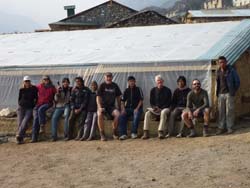
Dammaru Niraula was our guide and confidant for our recent visit to Nepal. We went on a humanitarian visit to build a hothouse in the village of Phortse in the Khumbu region of Nepal but also included some trekking on a personal level before and after our project. Dammaru was a vital link in getting the project off the ground and then…
-
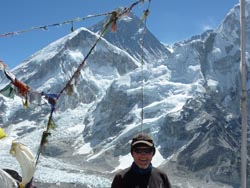
Dammaru Niraula Trekking Guide Trip Leader I have had an association with Dammaru over the last three years. My first trek with Dammaru was to the Solu Khumbu region where he tailored a trek to suit our request to climb some remote passes and stay off the main tourist routes where possible. His knowledge of the area was very impressive and his attention to our safety was always his major concern. The second trek I did with Dammaru two years…
-
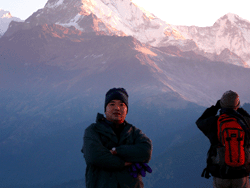
Dear Dammaru I have been trekking to Ghorepani poon hill on Jan 07 for 6 days with Mr. Dammaru. Poonhill is so beautiful, so all I can do is just taking pictures on poon hill. If you were planning to trek in Nepal, I…
-
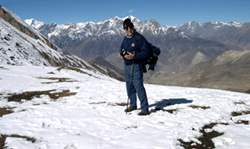
I was a member of a group of nine friends from Northamptonshire in 204 from the UK, on a trek of the Annapurna Circuit in Nepal. Apart from one member, we were all approaching or over the age of 60 and were all well aware of the difficulties we could encounter at Thorong La which sits at an altitude of 5,416 meters (17,769…
-
My husband and I embarked on a trip to Nepal in October 2006. We were hoping to avoid the large tour groups and were referred to Himalayan Holidays based in Kathmandu as a provider of customized tours. We had looked on the net to determine the tour we wanted to undertake and spoke to many people and eventually decided 6-day on Ghorepani Poon…
-
Dammaru Niraula was our guide and confidant for our recent visit to Nepal. We went on a humanitarian visit to build a hothouse in the village of Phortse in the Khumbu region of Nepal but also included some trekking on a personal level before and after our project. Dammaru was a vital link in getting the project off the ground and then as a support person in Nepal before, during and after. He completed the following tasks with the utmost professionalism and patience.
Arranged transfer of a large number of funds from Australian bank account to Nepalese bank account.
Communications with the village before we arrived to ensure the walls were built.
Organized our itinerary and necessary bookings for the trekking part of our journey for 8 adults.
Once we arrived in Nepal he then assisted us in purchasing all the gear we needed for the finishing of the hothouse. e.g. Polycarbonate roof sheeting and the many other bits of hardware necessary.
Transport of the roofing etc to Phortse village via helicopter, plane, yak, and porter.
As well as being a part of the project Dammaru also was our trekking guide for the duration of our trip of 5 weeks. He organized everything for us from the hotel, in Kathmandu and everything in between our trek to base camp.
He is honest, reliable and always puts the customer first. I would have no hesitation in recommending Dammaru to anyone who is considering a trip to Nepal.
-
Dammaru Niraula Trekking Guide Trip Leader
I have had an association with Dammaru over the last three years.
My first trek with Dammaru was to the Solu Khumbu region where he tailored a trek to suit our request to climb some remote passes and stay off the main tourist routes where possible. His knowledge of the area was very impressive and his attention to our safety was always his major concern.
The second trek I did with Dammaru two years later. This trip was the culmination of a long term project to build hothouses in a village deep into the Solu Khumbu region.
www.himalyanhothouse.org To complete this project Dammaru had a pivotal role in developing contacts, sourcing materials helping to manage the project finances. During the preparations for the Hothouse project, we found Dammaru to be honest, prompt and very hardworking. He also showed a great understanding of our requests and needs for the project to be successful. During the trek, itself Dammaru co-ordinated seven of our group and six porters as well as an extra climbing guide. He also acted as a very effective interpreter and liaison with the people of the village of Phortse.
On a personal level, Dammaru is the most genuine man with a big heart. He shared the passion for our project and its humanitarian ideals. Once again our safety during the whole trek was his main concern. A phrase often used by Dammaru sums up his professional work ethic. Service is most important.
I would not hesitate to recommend the services of Dammaru Niraula if you plan to undertake a trek or similar activity in Nepal.
-
Dear Dammaru
I have been trekking to Ghorepani poon hill on Jan 07 for 6 days with Mr. Dammaru. Poonhill is so beautiful, so all I can do is just taking pictures on poon hill. If you were planning to trek in Nepal, I would recommend you as one choice. His personality and professional guide skill makes me fun of Trekking and Nepal. so I am planning to go to Nepal again this August. He may meet all demand of you request on your trekking trip even though you join in the big group. Because he has more over 10 years experience of trekking guide for Many English and Japanese speaker. Actually, I have never met such a good Japanese speaker guide and I had no chance to speak in English with him.
I can recommend him to all people who need great experience guide with English or Japanese.
so you can get satisfaction for a great guide.
Very Thanks,
-
I was a member of a group of nine friends from Northamptonshire in 204 from the UK, on a trek of the Annapurna Circuit in Nepal. Apart from one member, we were all approaching or over the age of 60 and were all well aware of the difficulties we could encounter at Thorong La which sits at an altitude of 5,416 meters (17,769 feet).
Our group was led by Dammaru Niraula and we were most impressed by his leadership qualities. He introduced us gently to the lower altitudes and gradually encouraged us on longer and more arduous days of trekking. At Manang, he encouraged us to take a day trek up the lower slopes of Gangapurna and Annapurna III (see my photo below) and afterward to attend an altitude safety lecture in Manang. We are all convinced that, without his careful attention to altitude safety, we would not all have completed the trek over Thorong La and some of us at least would have joined the many trekkers who are forced to descend suffering from altitude sickness. We will always be eternally grateful to Dammaru and his team of Sherpas.
Like many Nepalese, Dammaru has a very quiet and gentle nature with a keen sense of humor and fun. At first, he appears to be shy and reserved but is constantly attending to the needs of his guests, assessing their temperaments and abilities and adjusting the itinerary accordingly. After a few days in his care, you come to realize that you are in the hands of an experienced, competent and understanding mountain guide.
I can recommend him too highly and know that he will continue to offer excellent trekking facilities in the Himalayas.
-
My husband and I embarked on a trip to Nepal in October 2006. We were hoping to avoid the large tour groups and were referred to Himalayan Holidays based in Kathmandu as a provider of customized tours. We had looked on the net to determine the tour we wanted to undertake and spoke to many people and eventually decided 6-day on Ghorepani Poon Hill trek. We live in a plain and therefore training for the trek was a challenge in itself. We spent our weekends climbing up and down a 700metre high hill that was regarded as sufficiently steep for our training needs. However, we were unsure of what to expect in Nepal and were concerned about our levels of fitness for the trek that we had in mind. We were introduced to our guide, Dammaru at the hotel we were staying in Kathmandu and our anxieties were quickly alleviated. This diminutive gentleman exuded confidence and assured us that he was able to accommodate our individual fitness levels and ensure that our time in his country was hassle free. And indeed he did! Without it being particularly noticeable, Dammaru controlled the tempo of our daily treks in order that the enjoyment factor always exceeded any physical discomfort. His relationship with the locals was both real & genuine which meant we never felt like intruders or uncomfortable in their presence. Dammaru's keen negotiation skills with the local tea house proprietors' meant the delay between arriving & unwinding from the challenges of our daily treks was minimal with the accommodation always being appropriate to our needs. His professionalism was faultless. He provided us with a wealth of information on all aspects of the history, culture, flora, and fauna of this remarkable country. Not only was he a fantastic guide, but his cheeky grin and sense of humor ensured Dammaru to be a fantastic traveling companion. Our dealings with Dammaru exceeded all expectations and we hope to make a return visit to this stunningly beautiful country.
Recent News and events
-
Visit Nepal Year 2020
Dear valuable guest, I would like to inform all of you that the coming year 2020 is declared as “The year of Tourism”?
-
Nepal celebrates 34th World Tourism Day
Nepal celebrates 34th World Tourism Day with the aim to promote water tourism in Nepal. This year’s theme celebration “Tourism and…
Jan-28-2015
