Frequently Asked the Question on Nepal Travel
Frequently Asked the Question on Nepal Travel
Do you have a satellite Phone?
We do not have a satellite phone but the hotel owners have satellite phones so if we have a problem, we can call from the hotel. I have a mobile phone and there is reception now in most villages in the mountains.
What happen if we need a Helicopter rescue?
We can manage the helicopter for emergencies, as long as you have travel insurance.
Do you know how to avoid A.M.S.?
Yes. This is important question for trekkers. If we follow acclimatization rules – ascend slowly- then we will avoid A.M.S. You will find in my itinerary, we always ascend slowly, usually 300m per night. This will avoid Acute Mountain Sickness.
What is the standard of food and accommodation?
Above 3000 meters the food is mostly vegetarian. It is advisable not to consume meat products as it may not be fresh. Accommodation is basic, but clean and comfortable. I only choose lodges that have a good hygiene reputation so as to minimize any health hazards associated with food preparation and consumption.
We will not be able to carry much luggage ourselves. How much will your porter carry?
No problem. You will only need to carry your small day pack with personal items. Your porter will carry the rest of your luggage; it is advisable to keep the bulk of your luggage to a weight of between 20-30kg.
How much extra money will we need during our trekking?
You need extra money during trekking, $10 per day is recommended, depending on how many extra drinks and chocolates you will buy.
Are we safe if we book ours trip with freelance trekking guide in Nepal?
You are safe hands if you book with a licensed guide as they are trained by a government agency. Be sure to check the license number that should be on the website.
How can I go to the hotel from the airport? Will someone pick me up from the airport?
We will always pick you up from the airport. If I am trekking when you arrive, my assistant will be waiting for you with a sign with your name and the trekking agency name. It is advisable to follow him and don’t believe other people.
What types of accommodation do you provide in Kathmandu?
In Kathmandu city there are many different categories of hotel. The hotels range from 1 to 5 star depending on your budget.
What about the drinking water in the trekking area? Do I need to bring purifying tablets/filter?
Bottled mineral water is available in every trekking area on the teahouse treks. On camping trips the water is purified with chemicals or boiled. Do not drink the water unless it has been boiled, filtered, purified or bottled.
Is the trip destinations area safe for tourists?
Your safety is own main concern. There will always be unforeseen dangers involved in adventure travel that you need to consider before booking. Our previous political problems are now over.
How strenuous is the trip? Am I fit enough for this kind of travel?
We have a wide diversity of trips In general the fitter you are the more you are likely to enjoy an active trip. Check the trip grading, anything listed as strenuous or challenging is exactly that.
What will the weather be like on our trip?
It is very difficult to accurately predict the weather. We always plan the itinerary during the most suitable time of the year for comfortable travel.
What happens if I get sick?
We always carry a well-stocked and appropriate medical kit. You should get sufficient insurance in case you should have to be evacuated by helicopter. A slight case of diarrhea is ordinary, as well as joint and muscle aches – all a part of walking in the hills and a change of diet.
Altitude sickness is exceptionally dangerous but, it can be avoided if you follow a few simple rules: Ascend slowly, plan for about 300metres increase in altitude per day, trek high and sleep low. Drink at least 2 liters of water per day (no alcohol, as this can mask the effects of altitude sickness), and BE SENSIBLE.
If you feel shortness of breath, a headache or faintness, tell your guide and rest immediately. Lie down and drink water. If you are still feeling unwell then you may think about going down a few hundred metres.
Do not pretend you are okay, and do not go down alone. A descent of a few hundred metres overnight may be sufficient to make you fully able to start trekking again the next day.
For more information, please go to: www.high-altitude-medicine.com
This informative site will tell you all you need to know, and also include a phonetic Nepali questionnaire for your porter. Porters are just as prone to altitude sickness as everyone else is.
What’s included?
Transport, accommodation, sightseeing while on the trek, meals, services of a trip leader and local guides, including porters.
Not included unless specified: international air fare, visas, insurance and other meals.
What if I take more or less time on my trek than I had planned and paid for?
A trekking holiday should never be about making it to the final point quickly. In fact, most of the time it isn’t even about the end point. Walking in the mountains is about enjoying the beauty of the people and places. Differences of any extra costs can be made up on your return. Remember, it’s your holiday and so long as you enjoy your trip the time taken is mostly irrelevant, unless of course there are flight timelines which you have to meet. You may find that weather or illness means you have to turn back, sit it out or take another route. No problem!
What are the trip leaders like?
Leaders are carefully selected for their personality, general travel experiences and enthusiasm for our style of travel. They facilitate the smooth running of your trip and are there to help you get the most out of your adventure. They are recruited on the basis of their resourcefulness and people skills.
How can I look after my porter?
Your porter can also be your friend – talk to him about his family. Most porters are students trying to earn extra cash, or married with very young families. These guys can be away from home for months on end carrying packs up and down hills. It’s a hard life and small gestures of appreciation, like buying them a cup of tea, never go astray. If you do not have a guide with you and are trekking with a porter only, please keep an eye on your porter (just as he will keep an eye on you) when on the trail. A porter is also prone to altitude sickness and even though he is working for you his welfare is everyone’s moral responsibility If your porter shows signs of altitude sickness, please ensure that your porter gets to a safer altitude and that medical attention is arranged. Never leave him to wander alone down the mountain. Make sure that he has sufficient food, drink and warm clothing.
How much money should I bring for my trip?
This will depend on the destination and you’re spending habits. Our trip descriptions provide you with an idea of how to budget for additional meals, optional excursions, and extra expenses you might incur on any particular trip.
Will there be credit card facilities on tours and in the trekking area?
In most cities, like Kathmandu and Pokhara, yes, to some extent, Travelers’ Cheques and Credit Cards can be used. However once you leave those cities behind, small amounts of U.S.D and Nepalese cash are best.
If I arrive a day early, can you help with hotel accommodation?
Yes, if you are booked on a fixed date itinerary and you arrive earlier than the itinerary date, we can arrange additional accommodation.
our testimonials
-
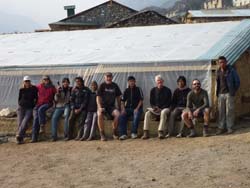
Dammaru Niraula was our guide and confidant for our recent visit to Nepal. We went on a humanitarian visit to build a hothouse in the village of Phortse in the Khumbu region of Nepal but also included some trekking on a personal level before and after our project. Dammaru was a vital link in getting the project off the ground and then…
-
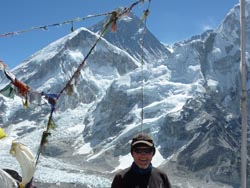
Dammaru Niraula Trekking Guide Trip Leader I have had an association with Dammaru over the last three years. My first trek with Dammaru was to the Solu Khumbu region where he tailored a trek to suit our request to climb some remote passes and stay off the main tourist routes where possible. His knowledge of the area was very impressive and his attention to our safety was always his major concern. The second trek I did with Dammaru two years…
-
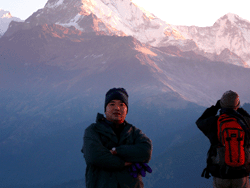
Dear Dammaru I have been trekking to Ghorepani poon hill on Jan 07 for 6 days with Mr. Dammaru. Poonhill is so beautiful, so all I can do is just taking pictures on poon hill. If you were planning to trek in Nepal, I…
-
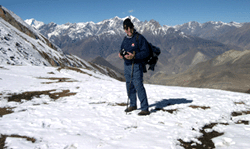
I was a member of a group of nine friends from Northamptonshire in 204 from the UK, on a trek of the Annapurna Circuit in Nepal. Apart from one member, we were all approaching or over the age of 60 and were all well aware of the difficulties we could encounter at Thorong La which sits at an altitude of 5,416 meters (17,769…
-
My husband and I embarked on a trip to Nepal in October 2006. We were hoping to avoid the large tour groups and were referred to Himalayan Holidays based in Kathmandu as a provider of customized tours. We had looked on the net to determine the tour we wanted to undertake and spoke to many people and eventually decided 6-day on Ghorepani Poon…
-
Dammaru Niraula was our guide and confidant for our recent visit to Nepal. We went on a humanitarian visit to build a hothouse in the village of Phortse in the Khumbu region of Nepal but also included some trekking on a personal level before and after our project. Dammaru was a vital link in getting the project off the ground and then as a support person in Nepal before, during and after. He completed the following tasks with the utmost professionalism and patience.
Arranged transfer of a large number of funds from Australian bank account to Nepalese bank account.
Communications with the village before we arrived to ensure the walls were built.
Organized our itinerary and necessary bookings for the trekking part of our journey for 8 adults.
Once we arrived in Nepal he then assisted us in purchasing all the gear we needed for the finishing of the hothouse. e.g. Polycarbonate roof sheeting and the many other bits of hardware necessary.
Transport of the roofing etc to Phortse village via helicopter, plane, yak, and porter.
As well as being a part of the project Dammaru also was our trekking guide for the duration of our trip of 5 weeks. He organized everything for us from the hotel, in Kathmandu and everything in between our trek to base camp.
He is honest, reliable and always puts the customer first. I would have no hesitation in recommending Dammaru to anyone who is considering a trip to Nepal.
-
Dammaru Niraula Trekking Guide Trip Leader
I have had an association with Dammaru over the last three years.
My first trek with Dammaru was to the Solu Khumbu region where he tailored a trek to suit our request to climb some remote passes and stay off the main tourist routes where possible. His knowledge of the area was very impressive and his attention to our safety was always his major concern.
The second trek I did with Dammaru two years later. This trip was the culmination of a long term project to build hothouses in a village deep into the Solu Khumbu region.
www.himalyanhothouse.org To complete this project Dammaru had a pivotal role in developing contacts, sourcing materials helping to manage the project finances. During the preparations for the Hothouse project, we found Dammaru to be honest, prompt and very hardworking. He also showed a great understanding of our requests and needs for the project to be successful. During the trek, itself Dammaru co-ordinated seven of our group and six porters as well as an extra climbing guide. He also acted as a very effective interpreter and liaison with the people of the village of Phortse.
On a personal level, Dammaru is the most genuine man with a big heart. He shared the passion for our project and its humanitarian ideals. Once again our safety during the whole trek was his main concern. A phrase often used by Dammaru sums up his professional work ethic. Service is most important.
I would not hesitate to recommend the services of Dammaru Niraula if you plan to undertake a trek or similar activity in Nepal.
-
Dear Dammaru
I have been trekking to Ghorepani poon hill on Jan 07 for 6 days with Mr. Dammaru. Poonhill is so beautiful, so all I can do is just taking pictures on poon hill. If you were planning to trek in Nepal, I would recommend you as one choice. His personality and professional guide skill makes me fun of Trekking and Nepal. so I am planning to go to Nepal again this August. He may meet all demand of you request on your trekking trip even though you join in the big group. Because he has more over 10 years experience of trekking guide for Many English and Japanese speaker. Actually, I have never met such a good Japanese speaker guide and I had no chance to speak in English with him.
I can recommend him to all people who need great experience guide with English or Japanese.
so you can get satisfaction for a great guide.
Very Thanks,
-
I was a member of a group of nine friends from Northamptonshire in 204 from the UK, on a trek of the Annapurna Circuit in Nepal. Apart from one member, we were all approaching or over the age of 60 and were all well aware of the difficulties we could encounter at Thorong La which sits at an altitude of 5,416 meters (17,769 feet).
Our group was led by Dammaru Niraula and we were most impressed by his leadership qualities. He introduced us gently to the lower altitudes and gradually encouraged us on longer and more arduous days of trekking. At Manang, he encouraged us to take a day trek up the lower slopes of Gangapurna and Annapurna III (see my photo below) and afterward to attend an altitude safety lecture in Manang. We are all convinced that, without his careful attention to altitude safety, we would not all have completed the trek over Thorong La and some of us at least would have joined the many trekkers who are forced to descend suffering from altitude sickness. We will always be eternally grateful to Dammaru and his team of Sherpas.
Like many Nepalese, Dammaru has a very quiet and gentle nature with a keen sense of humor and fun. At first, he appears to be shy and reserved but is constantly attending to the needs of his guests, assessing their temperaments and abilities and adjusting the itinerary accordingly. After a few days in his care, you come to realize that you are in the hands of an experienced, competent and understanding mountain guide.
I can recommend him too highly and know that he will continue to offer excellent trekking facilities in the Himalayas.
-
My husband and I embarked on a trip to Nepal in October 2006. We were hoping to avoid the large tour groups and were referred to Himalayan Holidays based in Kathmandu as a provider of customized tours. We had looked on the net to determine the tour we wanted to undertake and spoke to many people and eventually decided 6-day on Ghorepani Poon Hill trek. We live in a plain and therefore training for the trek was a challenge in itself. We spent our weekends climbing up and down a 700metre high hill that was regarded as sufficiently steep for our training needs. However, we were unsure of what to expect in Nepal and were concerned about our levels of fitness for the trek that we had in mind. We were introduced to our guide, Dammaru at the hotel we were staying in Kathmandu and our anxieties were quickly alleviated. This diminutive gentleman exuded confidence and assured us that he was able to accommodate our individual fitness levels and ensure that our time in his country was hassle free. And indeed he did! Without it being particularly noticeable, Dammaru controlled the tempo of our daily treks in order that the enjoyment factor always exceeded any physical discomfort. His relationship with the locals was both real & genuine which meant we never felt like intruders or uncomfortable in their presence. Dammaru's keen negotiation skills with the local tea house proprietors' meant the delay between arriving & unwinding from the challenges of our daily treks was minimal with the accommodation always being appropriate to our needs. His professionalism was faultless. He provided us with a wealth of information on all aspects of the history, culture, flora, and fauna of this remarkable country. Not only was he a fantastic guide, but his cheeky grin and sense of humor ensured Dammaru to be a fantastic traveling companion. Our dealings with Dammaru exceeded all expectations and we hope to make a return visit to this stunningly beautiful country.
Recent News and events
-
Visit Nepal Year 2020
Dear valuable guest, I would like to inform all of you that the coming year 2020 is declared as “The year of Tourism”?
-
Nepal celebrates 34th World Tourism Day
Nepal celebrates 34th World Tourism Day with the aim to promote water tourism in Nepal. This year’s theme celebration “Tourism and…
Jan-28-2015
